Catapult, 2024. 304 pages, $17.95 (paperback), ISBN: 9781646222254
Interview by Plamena Malinova
Through sharp and propulsive prose, All-Night Pharmacy offers a poignant look at a young woman’s journey toward self-ownership, exploring themes of addiction, coming out, and intergenerational trauma.
The novel opens with a spotlight on two sisters—first-generation immigrants with an inheritance trauma that implicitly drives their toxic bond. Madievsky’s characters grapple with their identities and the weight of family turmoil with a codependency on pills and people.
The parallel between the physical need to escape political oppression and how the next generation copes, and sometimes crumbles, is observed with much originality and imagination.
Plamena Malinova (P.M.): What inspired you to write All-Night Pharmacy? What was your journey of crafting characters, plot, etc., and how did that differ from process of writing poetry?
Ruth Madievsky (R.M.): With all my fiction, I try to channel a voice that I would follow anywhere. The first line of the novel, “Spending time with my sister Debbie was like buying acid off a guy you met on the bus,” was one of the first I wrote. I immediately felt like I wanted to get on that bus and see where it goes. For me, the voice generates the plot, not the other way around. The novel actually started out as a linked short story collection, so a lot of the work entailed stitching the stories together and filling in the interstitial spaces between them. Most of those stories made up parts one and two of the novel. I’m actually so pleased that one of the stories was summarily rejected by every literary journal I sent it to, since that story contained the ending of the novel!
In terms of how that dovetails with my poetic craft, I also approach poetry from a place of curiosity and not knowing where each line will take me. The difference is, the voice in my poems is usually a version of my own. But in both genres, the mystery of what I’ll write that day drives me.
The feelings of living between worlds and of what we owe the dead for their sacrifices are personal obsessions and forces I’m sure I’ll be contending with for a long time.
P.M.: Can you discuss the novel’s organizational structure and the balance between the addiction, coming-out, and ancestral trauma narratives? How did you prioritize each strand?
R.M.: Maria Kuznetsova asked in an interview in Full Stop, “Were you consciously trying to write one kind of narrative, or to resist writing one kind of narrative? Does that relate to the title, All-Night Pharmacy—almost like, hey, I’m open all night, there’s all kinds of shit in here!” I thought this was an incredible theory. The novel is like an all-night pharmacy where you can find the most disparate things that seemingly have no business being next to each other. But my feeling was that all of these themes are deeply interconnected. Sasha sees her psychic abilities as both an extension of her queerness and a reaction to trauma. The narrator has trouble cutting ties with her toxic sister, partly because they’re descended from survivors of the Holocaust and Soviet Terror, and the thought of voluntarily discarding a family member feels unnatural. I felt strongly that these threads are all related, but not in a pithy way you can distill down to a thesis.
P.M.: Immigrant narratives are often full of nostalgia, memory, and loss. And while I wouldn’t label All-Night Pharmacy as solely an immigrant narrative, I loved how the novel resisted the trope of characters who are defined by a longing for the ‘motherland.’ Can you elaborate on Debbie and her younger sister’s tendency to live on the edge? What was behind these psychological machines and their codependence?
R.M.: It doesn’t sit well with the narrator or Debbie that their ancestors lived through historic traumas that are unrelatable to them, only for them to be making decisions that those ancestors might find revolting. But on the other hand, what a blessing that the narrator can have erotic experiences with women and not feel oppressed by that desire. That freedom is something that might bring her ancestors joy in the abstract, even if they wouldn’t understand or approve of that particular application of it. The narrator and Debbie live close to the knife partly because of what their ancestors went through, though they wouldn’t think of it that way. I imagine there’s a version of survivor’s guilt there that drives them toward dangerous experiences.
P.M.: On the flip side, how much of the story was influenced by your family and your work as a clinical pharmacist? Where did you find inspiration to write about ‘bad’ women, when often, first-generation immigrants aren’t given room to misbehave?
R.M.: The feelings of living between worlds and of what we owe the dead for their sacrifices are personal obsessions and forces I’m sure I’ll be contending with for a long time. Some of the family lore, too—like the murdered great-grandfather—come from my family. I wrote about the joys and complications of that in a Catapult essay, “Translating the Immigrant Experience into Fiction,” where I also quoted a bunch of other fiction writers I admire on the topic. I’ve always been interested in “women behaving badly” (one of my favorite genres to read), and my knowledge of esoteric pharmacy laws inspired the expired opiate drug ring in the novel. I knew I wanted to include some scams and hijinks, and it was way easier to write what I know (and haven’t seen written about in fiction before) than to come up with some other ridiculous scheme.
It doesn’t sit well with the narrator or Debbie that their ancestors lived through historic traumas that are unrelatable to them, only for them to be making decisions that those ancestors might find revolting. But on the other hand, what a blessing that the narrator can have erotic experiences with women and not feel oppressed by that desire.
I think partly because of the pressure on first-generation immigrants—particularly eldest daughters—to uphold family honor, I was especially interested in transgression. It’s fun to raise the stakes and follow a character’s questionable choices to their aftermath.
P.M.: Culturally, many Eastern Europeans resist thinking of themselves in psychological terms. How did you approach writing about these dynamics in your characters? And what do you want readers to take away from the psychology of addiction and recovery?
R.M.: I hope it’s very clear that I don’t see addiction as a moral failing. Being alive is fucking hard, and the challenges that being an immigrant or descendant of immigrants adds can be sizable. Living between worlds—never feeling fully at home in one discrete place—can be isolating, and the Eastern European skepticism of therapy and other modalities of psychological support doesn’t help. I’ve mostly grown up in the U.S., having immigrated when I was two, but the chokehold that the Eastern European need to avoid pozor (shame) has had on me is significant. I used to write a column at Catapult called “Eldest Immigrant Daughter” all about that. At times, writing the novel, I felt constrained by the need to “represent” post-Soviet culture fairly. I was worried that readers would come away from the book believing it was a thorough portrait of what people from that slice of the world/time are like. But ultimately, you can’t control what people take away from your work, and I choose to believe that most readers will be more astute than to assume that these characters are stand-ins for a culture at large.
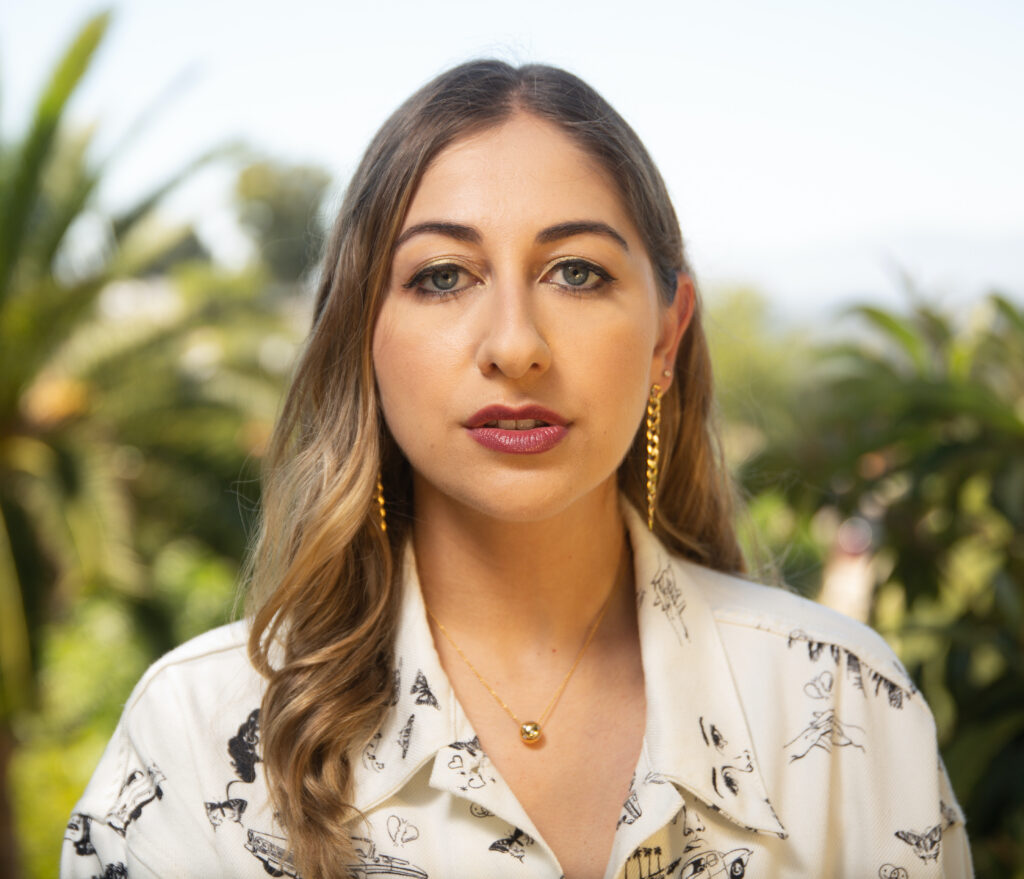
Ruth Madievsky is the author of the national bestselling novel, “All-Night Pharmacy,” winner of the California Book Award and the National Jewish Book Award for Debut Fiction, and a finalist for the Lambda Literary Award. Her fiction, nonfiction, and poetry appear in The New York Times, The Atlantic, The Los Angeles Times, The Cut, Harper’s Bazaar, GQ, and elsewhere. Her debut poetry collection, Emergency Brake, spent five months on Small Press Distribution’s Poetry Bestsellers list. She is a founding member of the Cheburashka Collective, a community of women and non-binary writers whose identity has been shaped by immigration from the Soviet Union to the United States. She lives in Los Angeles, where she works as a clinical pharmacist.
Plamena Malinova’s writing and author interviews appear in numerous outlets, including Public Seminar, Brooklyn Magazine, and The New School. “Afternoon Light,” an excerpt from her manuscript, is featured in the fourth edition of Expressionist Literary Magazine. She holds an MFA in Creative Nonfiction from The New School and is excited to join the Vermont Studio Center as a writing fellow in February of 2026. Find more of her writing on Substack.