This spring, the 2026 Third Coast Poetry Contest is judged by Karyna McGlynn. Karyna McGlynn is a queer writer, visual artist, and educator, and the author of three poetry collections from Sarabande Books, including 50 Things Kate Bush Taught Me About the Multiverse (Lambda Literary Finalist) and Hothouse (NYT Editor’s Choice). They are Director of Creative Writing at Interlochen Center for the Arts. We asked McGlynn a few questions about how writing contests have supported their career, how to decide if a piece is ready to submit, and what piques their interest as a reader.
Third Coast (TC): How has support from writing contests helped to shape your career? What value do you see in submitting to writing contests?
Karyna McGlynn (KM): Writing contests have been genuinely formative for me. Not just in terms of recognition, but in helping me stay in the long, often quiet middle of a writing life. Early on, even being longlisted or shortlisted helped my work become legible beyond my immediate community: editors reached out, conversations started, doors cracked open. Just as important was the confidence boost—those small external signals that I was connecting with people across the page.
Submitting work (imperfectly, bravely) is a muscle we have to build and maintain. To say “I’m a writer” is also to say “I’m willing to let my work be read and considered.” Contests create a focused, meaningful occasion for that practice, and they remind us that putting work into the world is part of the art.
Equally vital is the practice itself. Submitting work (imperfectly, bravely) is a muscle we have to build and maintain. To say “I’m a writer” is also to say “I’m willing to let my work be read and considered.” Contests create a focused, meaningful occasion for that practice, and they remind us that putting work into the world is part of the art.
TC: What advice do you give to a writer who’s wondering, “Is my piece ready to submit?”
KM: I usually say: it should feel finished enough that you’ve made all the decisions you know how to make right now, but not so precious that rejection would stop you from writing the next thing. If you’re mostly tinkering rather than discovering anything new, that’s often a sign the piece is ready to leave home.
I also encourage writers to ask a more useful question than “Is it perfect?” How about: “Is this piece doing what it wants/needs to do?” If the answer is yes (or even a confident “mostly”), that’s enough for now! Submission isn’t a verdict. Submit your work to things. If you receive a slate of rejections, come back to it later with fresh eyes.
TC: As a judge, what kind of work most often piques your interest? Is there anything you’d love to see from entrants?
KM: Your title is basically the first line of your poem; it needs to be strong. Don’t waste that opportunity to situate the reader and/or establish the attitude or problem of the poem. Poets are supposed to be masters of evocative compression; prove it with your title.
I’m deeply drawn to musicality—language that has sick textures and sonics and rhythms. I’m most excited when sound is married to voice, risk, and visual specificity. I want to feel the poem leaning toward something it doesn’t already know.
My biggest piece of advice is to be more specific. Too many poems are full of vague abstraction and emotional shorthand. Think of yourself like a film director. Are you giving your readers a world to inhabit? Are there enough sensory details for them to feel transported?
I’m deeply drawn to musicality—language that has sick textures and sonics and rhythms. I’m most excited when sound is married to voice, risk, and visual specificity. I want to feel the poem leaning toward something it doesn’t already know.
I’m not looking for a particular subject or style. I read widely and eclectically, and I’m always surprised by what hooks me. What I love most is work that trusts its own strangeness, that doesn’t rush to explain itself, and that feels awake to the pressures that shaped it.
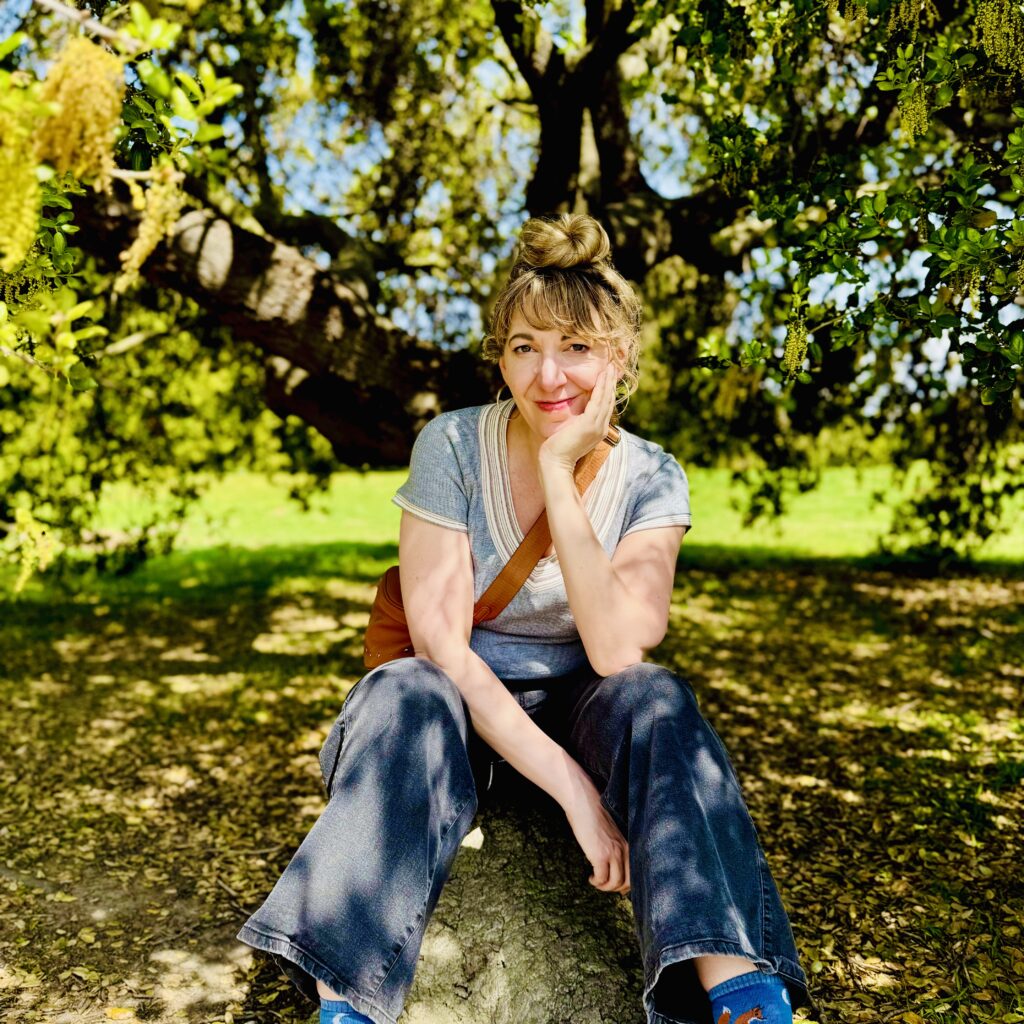
Karyna McGlynn is a writer, visual artist, and educator, and the author of three poetry collections from Sarabande Books, including 50 Things Kate Bush Taught Me About the Multiverse (Lambda Literary Finalist), Hothouse (New York Times Editor’s Choice), and I Have to Go Back to 1994 and Kill a Girl (Kathryn A. Morton Prize). Their work appears in Poetry Magazine, Kenyon Review, New England Review, and elsewhere. McGlynn is Director of Creative Writing at Interlochen Center for the Arts and was recently Visiting Distinguished Professor of Poetry in the Helen Zell Writers’ Program at the University of Michigan.